Center Certification & Testing International
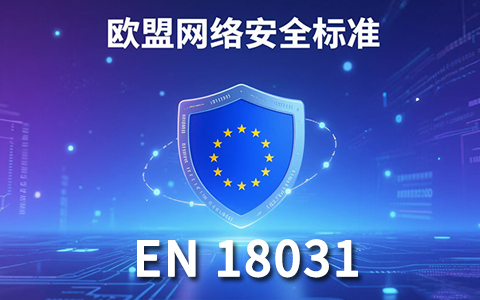
Manufacturers producing wireless devices and smart hardware for EU export take note: Starting August 1, 2025, the EU officially updated supporting rules for the RED Directive on radio equipment, introducing mandatory cybersecurity thresholds. All connected wireless products sold in the EU must hold an EN18031 certification to be listed for sale. Products without valid certification will face immediate delisting, sales bans and recalls. Many manufacturers remain unaware of the specifics of this new regulation and risk losing overseas orders due to compliance gaps.
Against the backdrop of the full popularization of smart digital devices, PD fast charging adapters have become daily essential electronic accessories favored by the public for their fast charging speed and wide device compatibility, driving sustained prosperity in the fast charging industry. Nevertheless, alongside rapid industry expansion, prominent problems including uneven product quality, frequent safety accidents and intensified market supervision have come to the fore. To standardize the market order of the fast charging industry and build a solid safety barrier for consumers’ electricity use, the state has implemented a mandatory CCC certification market access system for PD fast charging adapters. For manufacturers and sellers of fast charging products, CCC certification is no longer an optional bonus, but a rigid threshold for market entry and compliant operation.
Driven by surging demand for outdoor camping, field operations and emergency power supply, outdoor energy storage products have become hot commodities in the new energy sector. While the industry develops rapidly, market supervision has grown increasingly stringent. Many merchants suffer operational losses such as product removal, fines and returned goods due to missing compliance qualifications. Among all market access credentials, CCC certification is the core threshold for outdoor energy storage products to enter the domestic market for legal production and sales, as well as solid backing for enterprises to gain a foothold in the industry. For energy storage manufacturers and distributors, applying for CCC certification in a timely manner is no longer optional but a mandatory requirement.
As the market for civil and industrial drones continues to expand, cross-border trade and logistics transportation demand for drone batteries has grown year after year. Nevertheless, many drone manufacturers and merchants frequently encounter cargo detention, suspended logistics services and delayed orders. The core root of such issues lies in the lack of UN38.3 certification for batteries. As a fundamental access credential for air and sea shipment of drone batteries, UN38.3 certification is no longer an optional document, but an essential prerequisite for enterprises to develop domestic and overseas markets and guarantee smooth logistics. Many industry practitioners suffer unnecessary economic losses and miss market opportunities due to insufficient understanding of this certification, which highlights the critical importance of completing UN38.3 certification in compliance.

With the popularization of portable digital devices, power banks have become hot-selling electronic products on cross-border e-commerce and foreign trade markets. However, many high-quality domestic power banks get stuck at the compliance certification stage and cannot access mainstream international markets. Among various global certifications, CB certification features the broadest universal recognition and serves as a stepping stone for power banks to enter overseas markets. For manufacturers and foreign trade merchants, applying for power bank CB certification is a key measure to break into global markets at low cost, avoid trade barriers and strengthen product competitiveness.
South Korea is an overseas market with strong demand for digital accessories, making it a preferred overseas expansion destination for many domestic power bank brands. Many foreign trade manufacturers and cross-border sellers frequently encounter issues such as cargo detention at customs, store listing removal and sales bans when developing the South Korean market. The root cause mostly lies in the lack of officially recognized KC certification. Amid increasingly standardized market supervision, KC certification is no longer an optional bonus credential, but an essential market entry pass for power banks and a fundamental guarantee for enterprises to steadily tap business opportunities in South Korea.
Nowadays, wireless Bluetooth and Wi-Fi label printers are widely used in supermarkets, warehouses and e-commerce packaging. Many manufacturers face product removal, official inspections and lost orders after mass-producing and launching new products. Most enterprises overlook SRRC (State Radio Regulation Committee) Radio Equipment Type Approval, the mandatory entry threshold for wireless devices. For label printers with wireless transmitting functions, this certificate is not optional but an essential qualification for legal operation and market expansion.
Many Bluetooth headset manufacturers and cross-border sellers have encountered the same trouble: after preparing large batches of goods and shipping them to the EU, the cargo gets detained by customs and cannot be listed on e-commerce platforms. In most cases, the root cause is the lack of mandatory EU CE-RED certification. In the European market, wireless Bluetooth headsets fall under radio frequency electronic products, and CE-RED certification is a rigid market access threshold. No matter how good the product quality is, it cannot circulate without a valid compliance certificate.
Learn the latest exciting content
Tik Tok